How the Right Lighting Can Transform Your Home: A Guide to Home Lighting Design
Planning a home renovation or building a custom home? Learn how thoughtful home lighting design can transform the look, feel, and functionality of every room while creating a warm, beautiful, and practical living space.
When homeowners begin planning a renovation or designing a custom home, they often focus on flooring, cabinetry, countertops, paint colours, furniture, and décor. Lighting is frequently left until the very end—treated as a finishing touch rather than an essential part of the design.
In reality, home lighting design is one of the most important elements of interior design. It influences how your home looks, feels, and functions every single day. Even the most beautiful finishes can fall flat under poor lighting, while a thoughtfully planned lighting design can make an ordinary room feel warm, inviting, and luxurious.
Lighting does much more than illuminate a space. It creates atmosphere, improves functionality, highlights architectural features, and changes the way colours and materials appear. Whether you’re building a custom home, renovating your current home, or simply updating one room, understanding how to choose the right lighting can completely transform your living experience.
Why Good Home Lighting Design Matters
Imagine walking into two identical living rooms.
Both have the same flooring, furniture, paint colours, and décor.
One feels warm, welcoming, and comfortable.
The other feels cold, flat, and uninviting.
The difference is often the lighting.
Good lighting creates depth, highlights beautiful finishes, and brings balance to a room. Poor lighting can make expensive materials appear dull, cast unflattering shadows, and make a space feel smaller or less inviting.
A well-designed lighting plan should:
- Create a warm and welcoming atmosphere
- Improve the functionality of every room
- Highlight architectural features and focal points
- Enhance colours, textures, and finishes
- Make rooms appear larger and brighter
- Improve safety throughout your home
- Increase your home’s value and overall appeal
Simply put, lighting is the finishing touch that brings every design decision together.
Lighting Influences Mood and Lifestyle
Lighting affects us psychologically more than many people realize.
Soft, warm lighting encourages relaxation and comfort, making it ideal for living rooms and bedrooms where you want to unwind at the end of the day.
Cooler, brighter lighting promotes alertness and concentration, making it perfect for kitchens, home offices, laundry rooms, and other task-oriented spaces.
This is why restaurants typically use warm lighting to create a cozy atmosphere, while offices often use brighter lighting to improve productivity.
Your home should be designed with the same level of intention. Every room serves a different purpose, and your lighting should support how you use that space.
Lighting Changes the Way Colours and Materials Look
One of the biggest surprises homeowners experience during a renovation is discovering that their paint colour looks completely different once the lights are installed.
Lighting dramatically changes the appearance of every finish.
A soft white wall may suddenly look cream.
Grey paint may appear blue or purple.
Natural wood flooring can feel warmer or cooler depending on the light source.
Quartz countertops, tile, fabrics, cabinetry, and artwork can all change in appearance throughout the day as natural daylight shifts and artificial lighting takes over.
This is one of the reasons professional interior designers consider lighting early in the design process rather than treating it as a final decorating decision.
How to Choose the Right Lighting for Every Room
One of the most common mistakes homeowners make is selecting light fixtures based solely on appearance.
While beautiful fixtures certainly contribute to the overall design, they should never be chosen without first considering how the room will function.
Before shopping for lighting, ask yourself:
What activities take place in this room?
Kitchen
- Preparing meals
- Cooking
- Cleaning
- Entertaining family and guests
Living Room
- Relaxing
- Watching television
- Reading
- Entertaining
Bedroom
- Sleeping
- Reading
- Getting dressed
- Creating a calming retreat
Home Office
- Computer work
- Video meetings
- Reading documents
Once you understand how each room will be used, choosing the right lighting becomes much easier.
The Secret to Great Lighting Design: Layer Your Lighting
Professional designers rarely rely on a single ceiling fixture to light an entire room.
Instead, they combine several layers of lighting to create flexibility, comfort, and visual interest.
Ambient Lighting
Ambient lighting provides the overall illumination for a room and serves as the foundation of your lighting plan.
Examples include:
- Recessed lighting
- Flush or semi-flush ceiling fixtures
- Chandeliers
- Pendant lights
Task Lighting
Task lighting provides focused illumination where specific activities take place.
Examples include:
- Under-cabinet lighting in kitchens
- Reading lamps
- Vanity lighting
- Desk lamps
- Pendant lights over kitchen islands
Good task lighting reduces eye strain and makes everyday activities more comfortable.
Accent Lighting
Accent lighting adds depth and visual interest while highlighting architectural details or decorative features.
Examples include:
- Wall sconces
- Picture lights
- Cabinet lighting
- LED strip lighting
- Shelf lighting
- Artwork lighting
These three layers work together to create spaces that are both beautiful and highly functional.
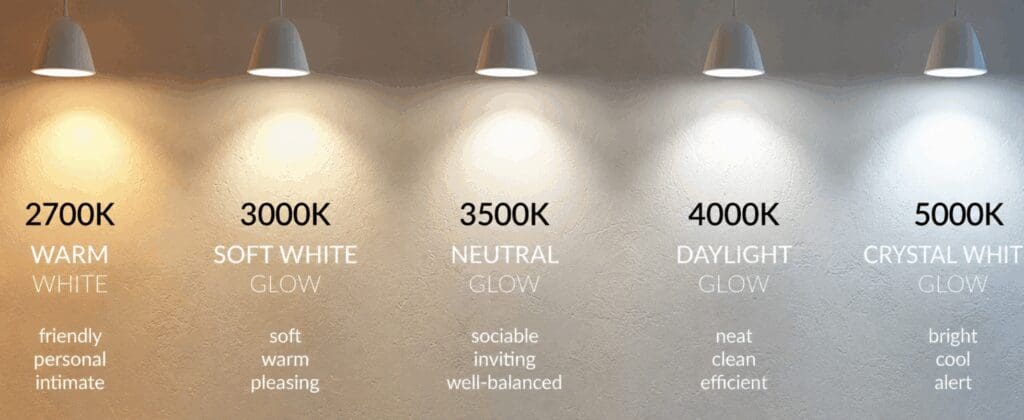
Choosing the Right Colour Temperature
Not all white light looks the same.
Colour temperature, measured in Kelvins (K), affects whether lighting appears warm or cool.
2700K – Warm White
Creates a cozy and inviting atmosphere.
Best for:
- Living rooms
- Bedrooms
- Dining rooms
3000K – Soft White
Provides a balanced white that feels warm while offering excellent visibility.
Ideal for:
- Kitchens
- Bathrooms
- Hallways
- Entryways
3500K–4000K – Neutral to Cool White
Brighter and more energetic.
Perfect for:
- Home offices
- Laundry rooms
- Garages
- Workshops
One of the most common mistakes homeowners make is mixing several colour temperatures throughout the home. Maintaining consistency helps your spaces feel cohesive and professionally designed.
Don’t Forget Natural Light
Artificial lighting is only part of the equation.
Natural daylight changes throughout the day and should always be considered during the design process.
Think about:
- Window placement
- Skylights
- Sheer window treatments
- Mirrors that reflect daylight
- Light-coloured finishes that bounce light throughout the room
The best lighting design balances both natural and artificial light so your home feels comfortable from morning until evening.
Why Dimmers Are One of the Best Investments
Installing dimmer switches is one of the simplest ways to improve your home’s lighting.
The same room often serves different purposes throughout the day.
A kitchen may need bright lighting while preparing dinner but softer lighting while entertaining guests.
A living room may require brighter light for reading and lower light for movie night.
Dimmers allow your lighting to adapt effortlessly while reducing energy consumption and extending the life of your bulbs.
Room-by-Room Lighting Tips
Kitchen
Include:
- Recessed ceiling lighting
- Pendant lights above the island
- Under-cabinet lighting
- Accent lighting inside glass cabinets (optional)
Living Room
Combine:
- Recessed lighting
- Floor lamps
- Table lamps
- Wall sconces
- Accent lighting around shelving or artwork
Dining Room
Choose a statement chandelier that is appropriately sized for your dining table and installed at the correct height.
Add a dimmer to easily transition from everyday meals to entertaining.
Bathroom
Avoid relying on a single ceiling light.
Vanity lighting placed beside or around the mirror reduces shadows and provides more flattering illumination for grooming and makeup application.
Bedroom
Create a calm, relaxing atmosphere with:
- Bedside lamps or wall sconces
- Soft ceiling lighting
- Reading lights
- Closet lighting with automatic sensors
Hallways & Staircases
Prioritize both safety and style.
Recessed lighting, wall sconces, or subtle stair lighting create visual continuity while making these areas brighter and more welcoming.
Common Lighting Mistakes to Avoid
Many homeowners unknowingly make lighting decisions that affect both the appearance and functionality of their home.
Common mistakes include:
- Relying on one ceiling fixture for the entire room
- Choosing lighting before planning the room’s layout
- Installing fixtures that are too large or too small
- Ignoring task lighting
- Mixing inconsistent colour temperatures
- Forgetting dimmer switches
- Buying decorative fixtures before creating a lighting plan
- Overlooking natural daylight
- Waiting until construction is nearly complete before planning electrical locations
Avoiding these mistakes can save both time and money while producing a far better result.
Why Lighting Should Be Planned Early
Lighting should never be an afterthought.
A professional lighting plan considers furniture layouts, cabinetry, architectural features, artwork, ceiling heights, electrical locations, and how every room will be used long before construction begins.
Planning your lighting early allows fixtures, switches, and electrical wiring to be installed exactly where they’re needed while avoiding costly changes during construction.
At Finesse Interior Solutions, I incorporate lighting design into every renovation and custom home project. From selecting fixtures and colour temperatures to planning electrical layouts and layered lighting, I help homeowners throughout Vancouver and the Lower Mainland create homes that are both beautiful and highly functional.
Frequently Asked Questions
What is the best lighting for a kitchen?
A combination of recessed ceiling lights, pendant lights over the island, and under-cabinet lighting provides the best balance of function and style.
What colour temperature is best for a home?
Most living spaces feel warm and inviting with 2700K–3000K lighting, while home offices, laundry rooms, and workshops often benefit from 3500K–4000K.
Should lighting be planned before a renovation?
Yes. Planning your lighting before construction begins ensures electrical locations, switches, and fixtures work seamlessly with your furniture layout, cabinetry, and overall design.
Why is layered lighting important?
Layered lighting combines ambient, task, and accent lighting to create flexible, comfortable, and visually appealing spaces that work for everyday living.
Final Thoughts
Lighting has the power to completely transform your home.
It influences your mood, highlights your finishes, improves functionality, and creates the atmosphere that makes a house truly feel like home.
Whether you’re planning a renovation, building a custom home, or updating a single room, investing in a thoughtful lighting design will enhance every other design decision you make.
At Finesse Interior Solutions, I help homeowners throughout Vancouver and the Lower Mainland create beautiful, functional interiors where lighting is carefully planned from the very beginning. The result is a home that not only looks exceptional but also supports the way you live every day.
Because great lighting doesn’t just brighten a roomit, transforms the way you experience your home.
